


Research and resources, shaped by those doing the work

Dark woodland in evening light
Unfurling fern frond

We're a community of researchers, practitioners, and thinkers committed to disseminating climate psychology widely, not just within our own professional circles. Through our flagship journal Explorations in Climate Psychology, our podcasts and talks, our library, and the contributions of members from across the world, we work to build a shared understanding of how psychology can meet this moment.

Explorations in Climate Psychology - the CPA journal

Navigating the inner and external work (relational and socio-political) that this moment calls on us to do, Explorations in Climate Psychology is CPA's flagship journal, published annually. We aim to be inclusive of the different ways people experience and engage with the climate and ecological crisis and welcome a wide range of forms: peer-reviewed research, analytical articles, reviews, interviews, reflections, testimonies, poetry, art, and lightly edited conversations.

Edited by CPA's Explorations Group, the journal explores current and emerging themes in the field, from climate grief and trauma to colonialism, decolonisation, the limits of Western rationality, and what it means to "stay with the trouble." The current editors of Explorations are noted in the latest issue.
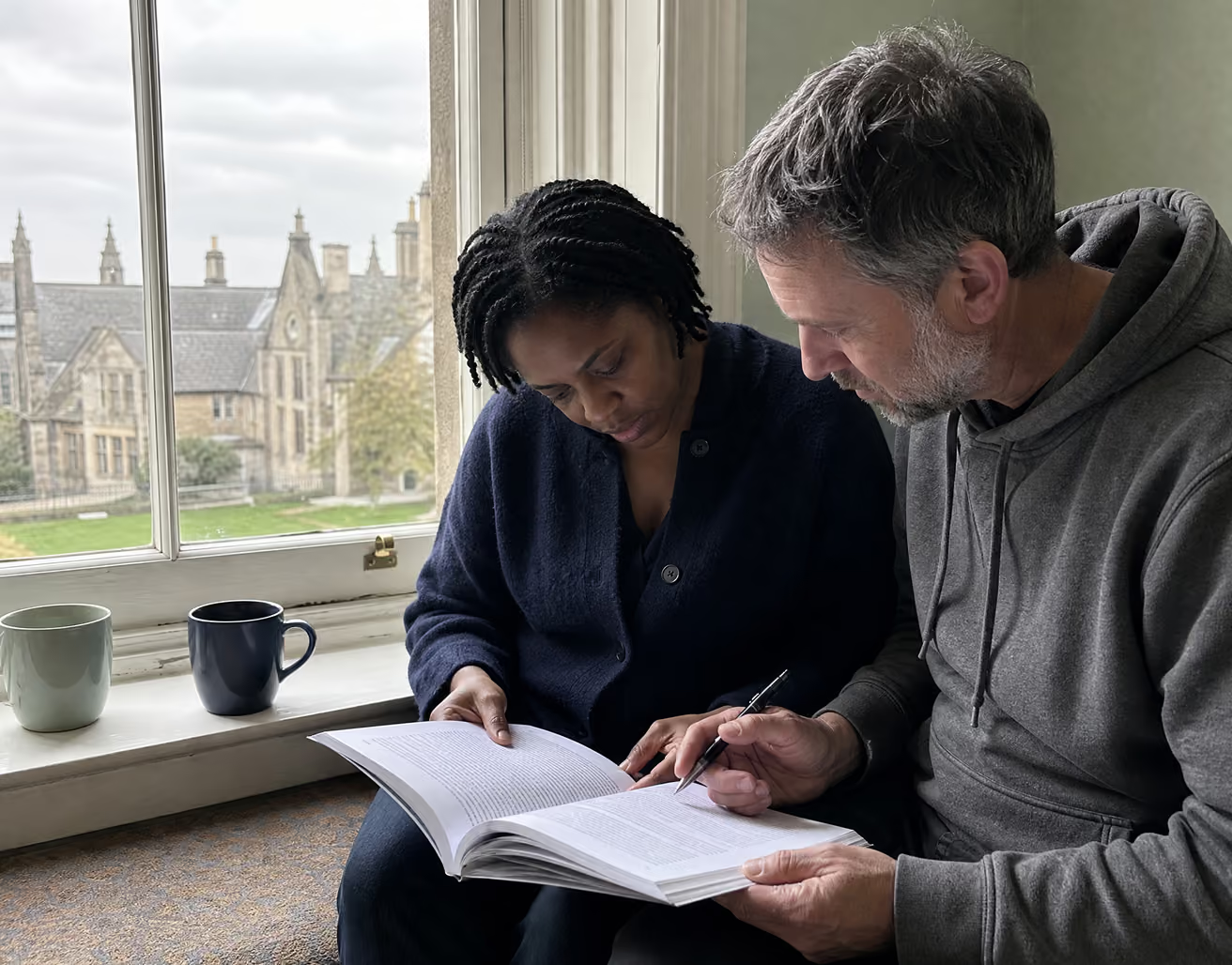

Two people reading an issue of the Explorations in Climate Psychology journal together
Three people researching together at a table with laptops and notes

We welcome contributions from inside and outside the CPA Community.

Find the latest call out here and guidelines for contributions here. The journal is open access and contributions can be used and quoted as long as they are referenced.

The Explorations group also offers online events with authors and other leading voices, which explore journal topics further.

See what's coming up

If you are interested in joining the editorial team (we particularly welcome young people and those of the Global Majority), or wish to get in touch for another reason you can email them here.

Explorations: A journal of Climate Psychology

A biannual publication from CPA's editorial working group, tracking the pace, rhythms and voices of climate psychology as the field emerges. Contributions are welcome from practitioners, researchers, artists and activists alike.

What's in the journal

Explorations makes space for essays, interviews, testimonies, poetry and art alongside peer-reviewed research — different ways of expressing and engaging with the climate and ecological crisis, gathered from contributors across the UK and beyond.

Latest issue: Heavy weather: Exploring reactionary states of mind

Issue 8, Heavy Weather, is out now. Inside: explorations of the post-truth world, group narcissism, the unconscious, AI and power, and how each feeds the reactionary state of mind.

We also publish pieces from our journal via our Substack account. You can connect with us there, just follow @climatepsychologyexplorations on Substack.

New to Climate Psychology? Start here

Climate psychology is a young field with deep roots. If you're new to it, the resources below are good places to begin: foundational guides, podcasts and videos, defining texts, and the essential reading that practitioners and researchers return to again and again.

Hands resting on a book beside a mug and reading glasses
Three people in discussion around a coffee table

The Handbook of Climate Psychology

CPA's foundational guide to the field, freely available to download. The handbook introduces the key concepts, frameworks, and questions that shape climate psychology, and is used widely as an entry point for practitioners, researchers, and the curious.

Free Open University course

Introducing Climate Psychology: facing the climate crisis

The course explores ideas from social theory, psychoanalysis, ecopsychology, eco-feminism and post-humanism to gain a deeper understanding of the climate and ecological crisis, its impact on our wellbeing and how to build psychological resilience. The course is endorsed and supported by the CPA.

Climate Crisis Conversations

Our podcasts offers an accessible, conversational entry point into climate psychology, featuring CPA practitioners, researchers, and friends in dialogue about the climate and biodiversity crisis and the full range of emotional responses to it.

What our members are sharing

Climate psychology is built collaboratively, by members for members and beyond. The work below reflects what people across our community are thinking about, researching, writing, and making right now. These are member contributions, not CPA publications, voices from across the alliance.

CPA members sharing handwritten notes around a table

Eco-somatics and Collective Imagination – Broadening Perspectives for Climate Transition Discourse

By Frederike Doffin — "I have been exploring how eco-somatics and collective imagination add different layers to the discourse on climate change and broaden perspectives by contributing through sensory approaches and body-based knowledge. I felt the need to complement predominant discourses on climate transition with practices that are situated in the body, in co-creativity with plants and which have the capacity to embrace subtle realms of more-than-human life forces..."

Facing Our Climate Reality: Honest Briefings That Spark Community Action and Resilience

By Nick Drew — Nick Drew, from the Climate Psychology Alliance and a long-standing member of the Emergencies Partnership (EP) Mental Health Network, has written a powerful blog as a stark (but also hopeful) reminder that the UK is already living in a climate crisis, with record-breaking heat and rising risks becoming the new normal. Nick highlights urgent warnings from national reports, the surge of community screenings of the People’s Emergency Briefing film and the growing need for collective resilience. Nick’s message is clear: we must turn awareness into community‑level action because investing in preparedness now saves lives later but, thankfully, there are passionate and capable people who are feeling more capable and motivated to act (and that can grow).

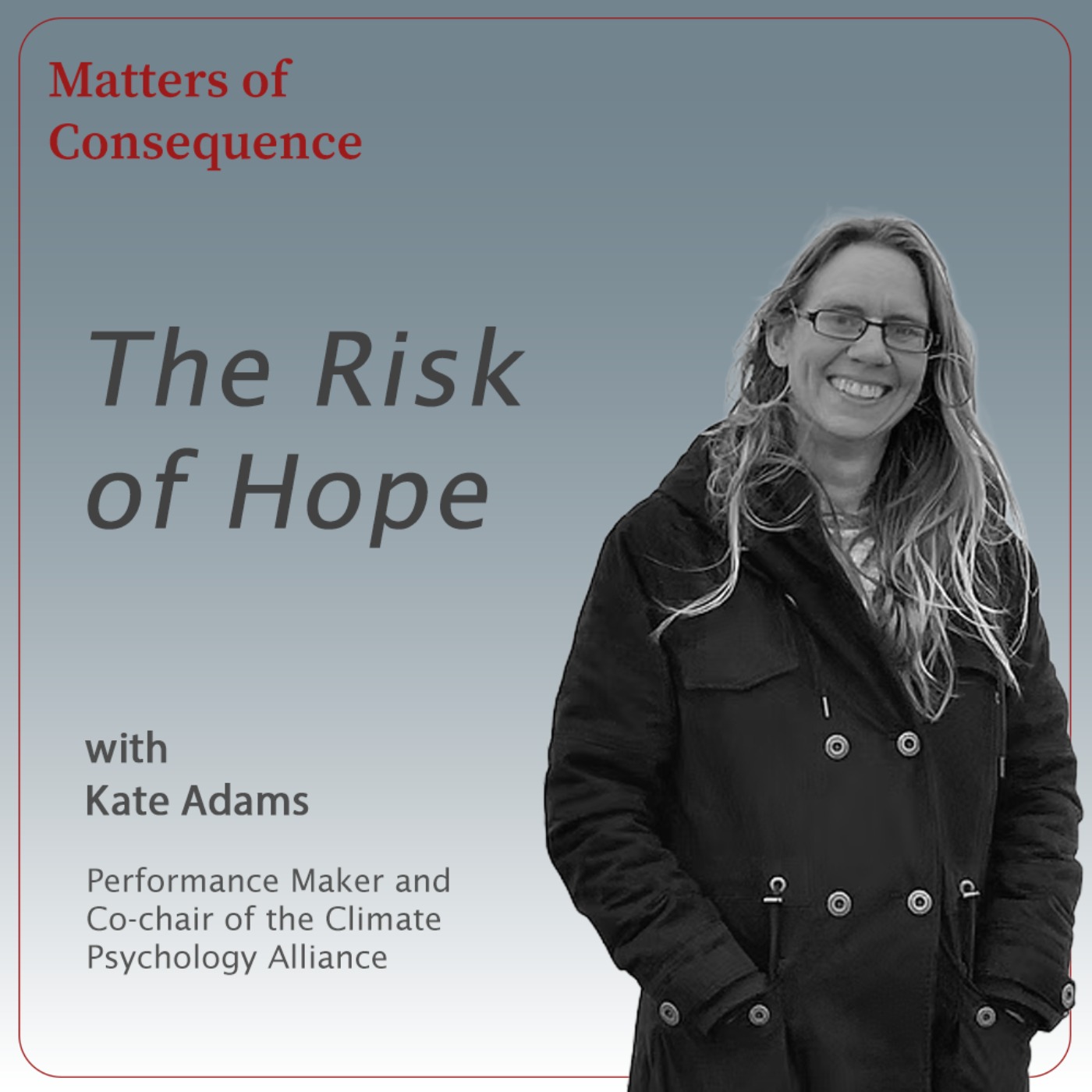
The Risk of Hope Matters of Consequence: Meaningful Conversations for Curious People

What happens when the emotional weight of the climate crisis feels too heavy to carry? In this deeply personal conversation Kate Adams, a performance maker, lecturer, and former co-chair of the Climate Psychology Alliance takes us inside the unseen world of eco-emotions and artistic resilience. The episode explores the systemic importance of vulnerability, the tension between grief and hope, and the quiet work of creating spaces where people can confront the emotional toll of the climate crisis without judgment.

Wet garden path through lush greenery

The Climate Crisis Digest is our monthly publication, usually a short piece written by members.

The name Digest reflects the psychoanalyst Wilfred Bion's insight that experience needs to be digested in order to be thinkable, especially when it is hard to bear (hence CPA's approach to difficult truths). The Digest style is not academic or polemical, more journalistic and exploratory in tone. That requires reflection by the author, to invite reflection in readers. Reflection here means inquiring into our emotional experience so as to more fully engage with the meaning of what is written.

The Digest is edited by Thulsi Prabakaran.

Go to recent Digest articles
Subscribe to our newsletter for the monthly Climate Crisis Digest plus CPA news
Subscribe to the Digest

Subscribe to the Digest

* indicates required
Are you joining as a student or young person?
This is so we can contact you with relevant information

Would you like to receive communications from CPA?

You can decide to stop receiving emails from us at any time by clicking the 'unsubscribe' link in the footer of any email you receive from us, or by contacting us at admin@climatepsychologyalliance.org. We will treat your information with respect. For more information about our privacy practices please visit our website.

We use Mailchimp as our marketing platform. By clicking below to subscribe, you acknowledge that your information will be transferred to Mailchimp for processing. Learn more about Mailchimp's privacy practices.

Library

Our library is a collection of open-access research and resources, written or recommended by CPA members.

Displaying
1
of
1
articles
Thank you! Your submission has been received!
Oops! Something went wrong while submitting the form.
Theory and frameworks
Activism & collective action
Policy

Meeting Environmental Challenges: The Role of Human Identity

Published by WWF-UK, this book argues that mainstream approaches to environmental campaigning - focused on policy change or individual behaviour change - largely ignore the role of human identity in shaping responses to environmental challenges. Crompton and Kasser argue that many current environmental campaigns inadvertently reinforce the very aspects of identity (materialism, extrinsic values, threat-driven defensiveness) that drive unsustainable behaviour in the first place, drawing on values theory - including Schwartz's circumplex model of values - and self-determination theory to make this case. The book proposes that lasting engagement with environmental challenges requires deliberately activating more helpful, intrinsic aspects of identity rather than relying on fear, guilt or narrow self-interest, and closes by identifying common ground between environmental campaigning and other social justice movements that share this identity-based analysis.

2009
Research papers
Meeting Environmental Challenges: The Role of Human Identity
Crompton
2009
Therapeutic perspectives
Denial & avoidance
Climate and ecological emotions

Climate Silence in the Consulting Room: Waiting for Help to Come

From the perspective of a psychotherapist deeply affected by the climate crisis, this chapter questions why patients rarely directly verbalise concerns about climate change in sessions. Drawing on Henry Rey's concept of dying inner objects that people wait for help to repair, and on the work of Sally Weintrobe and George Marshall, the chapter suggests that, despite overt climate silence, a process of mourning damaged inner objects can facilitate facing the greatest threat to humanity we have known.

2024
Books & chapters
Climate Silence in the Consulting Room: Waiting for Help to Come
Conway
2024
Youth & intergenerational
Climate and ecological emotions

Caring for Emotions in Climate Change Education

Climate change education ‘helps people understand and address the impacts of the climate crisis, empowering them with the knowledge, values and attitudes needed to act as agents of change’

Tools & guides
Louise Edgington
Caring for Emotions in Climate Change Education
Edgington
Therapeutic Support
Therapeutic perspectives

Therapeutic Support Additional Reading

The items on this list address the practice of psychotherapy and counselling in relation to the climate and ecological crisis - clinical approaches, therapist training, professional responsibility, and therapists' experiences. They are not freely accessible online - most require a library subscription, institutional access, or purchase.

2026
Reading list
Climate Psychology Alliance
Therapeutic Support Additional Reading
Climate Psychology Alliance
2026
Activism & collective action
Youth & intergenerational

Climate Courage Campaign

Support teachers. Face what's coming. Act together. Campaign hosted by the Climate Majority Project, supported by CPA members, building a coalition of climate scientists, mental health professionals, youth leaders and educators to support emotionally attuned, whole-school climate education.

Organisations & networks
Climate Majority Project
Climate Courage Campaign
Climate Majority Project
Climate justice & decolonising

Impacts of climate change on rural poverty in the Brazilian Northeast and South

ABSTRACT: The objective is to analyze how climate change impacts affect rural poverty dimensions of residents of communities in the backlands of the Northeast and South of Brazil. This study has a qualitative design. Seven focus groups were conducted with 79 participants from impoverished rural communities in the Northeast and South of Brazil. The research participants simultaneously experience various levels of deprivation in the form of multiple shortcomings, such as food deprivation, improper housing and the lack of leisure areas. Also, a series of deficiencies linked to climate change is identified, such as the loss of production and the feeling of insecurity for the future.

2020
Research papers
Impacts of climate change on rural poverty in the Brazilian Northeast and South
Cidade
2020
Climate and ecological emotions
Hope & resilience
Denial & avoidance

Well-Being of Misfortune: Accepting Ecological Disaster

The Climate Psychology Alliance (CPA) has developed an intimate interweaving of the three strands of the political, the psychology of unconscious process and the science of climate change to understand our culture’s responsibility for and capacity to respond to planetary catastrophe. In this article I want to re-imagine what might prevent us sinking into a helpless despair as our world falls apart.

Articles & reflections
Chris Robertson
Well-Being of Misfortune: Accepting Ecological Disaster
Robertson
Climate justice & decolonising
Policy

Impacts of climate change on health and wellbeing in South Africa

Summary: This paper reviews existing evidence on the health and wellbeing impacts of climate change in South Africa, covering a wide range of direct and indirect pathways, including heat-related illness, changing patterns of infectious disease, food and water insecurity, and the mental health consequences of drought, flooding and displacement. The authors highlight South Africa's particular vulnerability given existing socioeconomic inequality, informal settlement housing conditions, and reliance on rain-fed agriculture, arguing that climate change is likely to exacerbate existing health disparities rooted in the country's history. The potential impacts of climate change on mental health are considered as part of this broader review.

2018
Research papers
Chersich, M. F.
Wright, C. Y.
Venter, F.
Rees, H.
Scorgie, F.
Impacts of climate change on health and wellbeing in South Africa
Chersich
2018
Hope & resilience
Climate justice & decolonising
Therapeutic Support

Effects of individual resilience intervention on indigenous people who experienced Typhoon Morkot in Taiwan

This quantitative study examines the effects of an individual resilience intervention delivered to Indigenous people in Taiwan following Typhoon Morakot (2009), which caused severe harm to Indigenous communities in the country's southern mountainous regions. The authors implemented a resilience intervention programme with 77 Indigenous participants residing in typhoon-affected areas of Kaohsiung, and measured individual resilience scores before and after the intervention. The study found that participants had significantly higher resilience scores after completing the programme compared with before, suggesting that targeted psychosocial intervention can support recovery and resilience-building among Indigenous communities following climate-related disaster events.

2012
Research papers
Cheng, S-F.
Cheng, C-W.
Hsieh, W-C.
Chi, M-C.
Lin, S-J.
Effects of individual resilience intervention on indigenous people who experienced Typhoon Morkot in Taiwan
Cheng
2012
Parenting
Youth & intergenerational

How to Talk to Your Kids About the Climate Crisis

Accessible and concise guidance for parents on talking with children about the climate crisis.

Tools & guides
How to Talk to Your Kids About the Climate Crisis
Greenpeace
Youth & intergenerational
Parenting

Guidance on Effective Climate Change Communication with Children

Guide prepared for the Schools Summit of London Climate Action Week 2021, offering guidance on communicating about climate change with children.

2021
Tools & guides
Guidance on Effective Climate Change Communication with Children
Hickman
2021
Therapeutic perspectives
Climate and ecological emotions

What Psychotherapy Can Do for the Climate and Biodiversity Crises

Apologies in advance, but I’m hoping that reading this will help you feel depressed – about biodiversity loss and our lack of progress over the climate crisis. The thing is, in these extreme circumstances, a bit of depression about the environment could be precisely what we need – it’s the only sane response.

2019
Articles & reflections
What Psychotherapy Can Do for the Climate and Biodiversity Crises
Hickman
2019
Climate justice & decolonising
Policy

Crop-damaging temperatures increase suicide rates in India

Suicide is a stark indicator of human hardship, yet the causes of these deaths remain understudied, particularly in developing countries. This analysis of India, where one fifth of the world’s suicides occur, demonstrates that the climate, particularly temperature, has strong influence over a growing suicide epidemic. With 47 y of suicide records and climate data, I show that high temperatures increase suicide rates, but only during India’s growing season, when heat also reduces crop yields. My results are consistent with widely cited theories of economic suicide in India. Moreover, these findings have important implications for future climate change; I estimate that warming temperature trends over the last three decades have already been responsible for over 59,000 suicides throughout India.

2017
Research papers
Carleton, T. A.
Crop-damaging temperatures increase suicide rates in India
Carleton
2017
Therapeutic perspectives
Climate and ecological emotions

Compassion-focused approaches to understanding the mental health of climate scientists

As we face a future of rising global temperatures, and associated extreme weather events, distressing emotional responses are understandable. Climate scientists comprise a unique group, in that they must regularly confront the reality, and consequences, of climate change. In this paper, we explore how the principles of compassion-focused therapy (CFT) might be applied to comprehend the responses of climate scientists to climate change; by doing so, we aim to gain a deeper understanding of these responses in order to consider fruitful avenues for providing support and investigating this area further.

n.d.
Research papers
Compassion-focused approaches to understanding the mental health of climate scientists
Calabria
Climate and ecological emotions
Therapeutic Support

What happens in Climate Cafes? The Cognitive Behaviour Therapist, 17

As humanity faces a future of rising global temperatures, and associated extreme weather events, distressing emotional responses are understandable, but often silenced. Climate Cafés are unique, dedicated spaces where such responses can be shared and validated with others. Semi-structured interviews were conducted with attendees of Climate Cafés facilitated by the Climate Psychology Alliance (CPA). An initial interview of 45 minutes was followed by a shorter follow-up interview 3 months later. Interpretative phenomenological analysis (IPA) methodology was used with seven female participants. Four superordinate themes were identified: (1) Having a keen awareness of threats to planetary health, (2) Action taken in the face of climate change, (3) Journeying from isolation to connection, and (4) Legacy of Climate Cafés.

n.d.
Research papers
What happens in Climate Cafes? The Cognitive Behaviour Therapist, 17
Calabria
Climate and ecological emotions
Creative practice

Voice 12: How Does Climate Breakdown Make Me Feel?

The deep sense of injustice. A darkness, a dread. Lost. Mad and alone.'

2024
Books & chapters
Voice 12: How Does Climate Breakdown Make Me Feel?
Budd
2024
Climate and ecological emotions
Creative practice

Mourning Earth: Ritual Expressions of Ecological Grief

This thesis considers the potential of grief and mourning to foster meaningful engagement with global ecological crises. I explore this potential through my own studio practice, positioning artworks and creative processes as vehicles for articulating collective experiences of loss, anxiety, and bereavement. To create these artworks, I draw from scientific knowledge, regional folkways, geologic history, and intergenerational experience with an emphasis on local culture.

2021
Research papers
Katlyn Brumfield
Mourning Earth: Ritual Expressions of Ecological Grief
Brumfield
2021
Climate and ecological emotions
Therapeutic Support
Activism & collective action

'Ways of Being' When Facing Difficult Truths: Exploring the Contribution of Climate Cafes to Climate Crisis Awareness

A climate cafe is a hospitable and empathic space where anxiety about the current crisis can be safely expressed and people can engage with difficult truths while staying connected and grounded. With emotionally containing structures in place, climate cafes allow participants to explore anger, helplessness, sadness, grief and depression without dissociating, numbing or going into blind panic, offering relief and a powerful sense of connection.

2024
Books & chapters
Gillian Broad
Ways of Being' When Facing Difficult Truths: Exploring the Contribution of Climate Cafes to Climate Crisis Awareness
Broad
2024

Join our community of thinkers, researchers, and reflective practitioners

CPA is more than a publisher or a library. We're a working community of people thinking together about climate psychology. Our members participate in regular Thinking Spaces, contribute to research groups, edit the Explorations in Climate Psychology Journal, maintain the library, and bring their own work into shared conversation. Research at CPA is collaborative, generative, and grounded in practice.

Why join:

  • Monthly Thinking Space

  • Research Group

  • Opportunities to Publish

  • Intergenerational buddying

  • Student and Young Members Group

House with lit windows under a sunset sky