


Research and resources, shaped by those doing the work

Dark woodland in evening light
Unfurling fern frond

We're a community of researchers, practitioners, and thinkers committed to disseminating climate psychology widely, not just within our own professional circles. Through our flagship journal Explorations in Climate Psychology, our podcasts and talks, our library, and the contributions of members from across the world, we work to build a shared understanding of how psychology can meet this moment.

Explorations in Climate Psychology - the CPA journal

Navigating the inner and external work (relational and socio-political) that this moment calls on us to do, Explorations in Climate Psychology is CPA's flagship journal, published annually. We aim to be inclusive of the different ways people experience and engage with the climate and ecological crisis and welcome a wide range of forms: peer-reviewed research, analytical articles, reviews, interviews, reflections, testimonies, poetry, art, and lightly edited conversations.

Edited by CPA's Explorations Group, the journal explores current and emerging themes in the field, from climate grief and trauma to colonialism, decolonisation, the limits of Western rationality, and what it means to "stay with the trouble." The current editors of Explorations are noted in the latest issue.


Two people reading an issue of the Explorations in Climate Psychology journal together
Three people researching together at a table with laptops and notes

We welcome contributions from inside and outside the CPA Community.

Find the latest call out here and guidelines for contributions here. The journal is open access and contributions can be used and quoted as long as they are referenced.

The Explorations group also offers online events with authors and other leading voices, which explore journal topics further.

See what's coming up

If you are interested in joining the editorial team (we particularly welcome young people and those of the Global Majority), or wish to get in touch for another reason you can email them here.


Explorations: A journal of Climate Psychology

A biannual publication from CPA's editorial working group, tracking the pace, rhythms and voices of climate psychology as the field emerges. Contributions are welcome from practitioners, researchers, artists and activists alike.

What's in the journal

Explorations makes space for essays, interviews, testimonies, poetry and art alongside peer-reviewed research — different ways of expressing and engaging with the climate and ecological crisis, gathered from contributors across the UK and beyond.

Latest issue: Heavy weather: Exploring reactionary states of mind

Issue 8, Heavy Weather, is out now. Inside: explorations of the post-truth world, group narcissism, the unconscious, AI and power, and how each feeds the reactionary state of mind.

We also publish pieces from our journal via our Substack account. You can connect with us there, just follow @climatepsychologyexplorations on Substack.

New to Climate Psychology? Start here

Climate psychology is a young field with deep roots. If you're new to it, the resources below are good places to begin: foundational guides, podcasts and videos, defining texts, and the essential reading that practitioners and researchers return to again and again.

Hands resting on a book beside a mug and reading glasses
Three people in discussion around a coffee table

The Handbook of Climate Psychology

CPA's foundational guide to the field, freely available to download. The handbook introduces the key concepts, frameworks, and questions that shape climate psychology, and is used widely as an entry point for practitioners, researchers, and the curious.

Free Open University course

Introducing Climate Psychology: facing the climate crisis

The course explores ideas from social theory, psychoanalysis, ecopsychology, eco-feminism and post-humanism to gain a deeper understanding of the climate and ecological crisis, its impact on our wellbeing and how to build psychological resilience. The course is endorsed and supported by the CPA.

Climate Crisis Conversations

Our podcasts offers an accessible, conversational entry point into climate psychology, featuring CPA practitioners, researchers, and friends in dialogue about the climate and biodiversity crisis and the full range of emotional responses to it.

From Anxiety to Agency: stepping up, rather than shutting down, in the face of the climate change crisis

Rebellion is for Life, not just Extinction; focussing on regenerative culture

What our members are sharing

Climate psychology is built collaboratively, by members for members and beyond. The work below reflects what people across our community are thinking about, researching, writing, and making right now. These are member contributions, not CPA publications, voices from across the alliance.

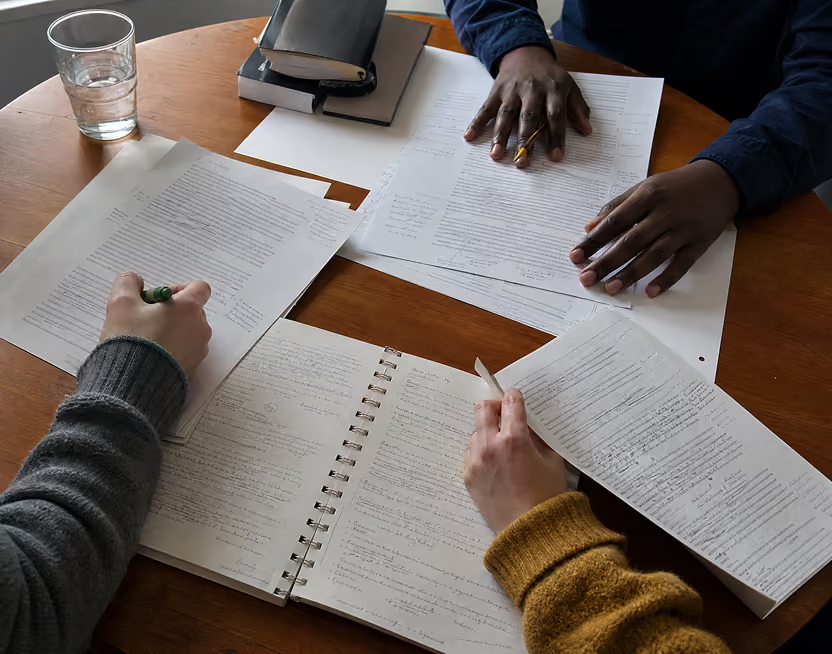
CPA members sharing handwritten notes around a table

Eco-somatics and Collective Imagination – Broadening Perspectives for Climate Transition Discourse

By Frederike Doffin — "I have been exploring how eco-somatics and collective imagination add different layers to the discourse on climate change and broaden perspectives by contributing through sensory approaches and body-based knowledge. I felt the need to complement predominant discourses on climate transition with practices that are situated in the body, in co-creativity with plants and which have the capacity to embrace subtle realms of more-than-human life forces..."

Facing Our Climate Reality: Honest Briefings That Spark Community Action and Resilience

By Nick Drew — Nick Drew, from the Climate Psychology Alliance and a long-standing member of the Emergencies Partnership (EP) Mental Health Network, has written a powerful blog as a stark (but also hopeful) reminder that the UK is already living in a climate crisis, with record-breaking heat and rising risks becoming the new normal. Nick highlights urgent warnings from national reports, the surge of community screenings of the People’s Emergency Briefing film and the growing need for collective resilience. Nick’s message is clear: we must turn awareness into community‑level action because investing in preparedness now saves lives later but, thankfully, there are passionate and capable people who are feeling more capable and motivated to act (and that can grow).

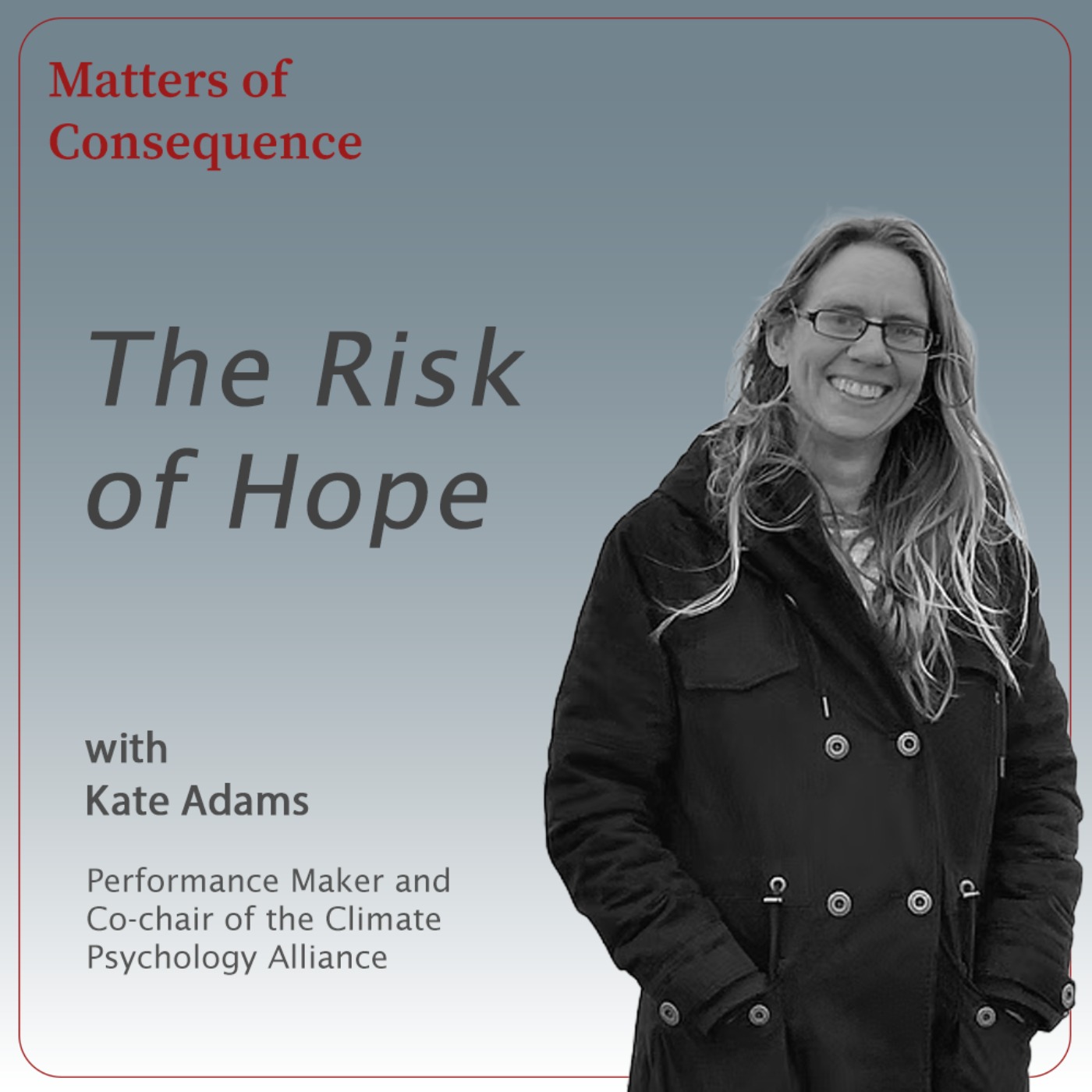
The Risk of Hope Matters of Consequence: Meaningful Conversations for Curious People

What happens when the emotional weight of the climate crisis feels too heavy to carry? In this deeply personal conversation Kate Adams, a performance maker, lecturer, and former co-chair of the Climate Psychology Alliance takes us inside the unseen world of eco-emotions and artistic resilience. The episode explores the systemic importance of vulnerability, the tension between grief and hope, and the quiet work of creating spaces where people can confront the emotional toll of the climate crisis without judgment.

Wet garden path through lush greenery

The Climate Crisis Digest is our monthly publication, usually a short piece written by members.

The name Digest reflects the psychoanalyst Wilfred Bion's insight that experience needs to be digested in order to be thinkable, especially when it is hard to bear (hence CPA's approach to difficult truths). The Digest style is not academic or polemical, more journalistic and exploratory in tone. That requires reflection by the author, to invite reflection in readers. Reflection here means inquiring into our emotional experience so as to more fully engage with the meaning of what is written.

The Digest is edited by Thulsi Prabakaran.

Go to recent Digest articles
Subscribe to our newsletter for the monthly Climate Crisis Digest plus CPA news
Subscribe to the Digest

Subscribe to the Digest

* indicates required
Are you joining as a student or young person?
This is so we can contact you with relevant information

Would you like to receive communications from CPA?

You can decide to stop receiving emails from us at any time by clicking the 'unsubscribe' link in the footer of any email you receive from us, or by contacting us at admin@climatepsychologyalliance.org. We will treat your information with respect. For more information about our privacy practices please visit our website.

We use Mailchimp as our marketing platform. By clicking below to subscribe, you acknowledge that your information will be transferred to Mailchimp for processing. Learn more about Mailchimp's privacy practices.

Library

Our library is a collection of open-access research and resources, written or recommended by CPA members.

Displaying
1
of
1
articles
Thank you! Your submission has been received!
Oops! Something went wrong while submitting the form.
Climate and ecological emotions
Climate justice & decolonising

Voice 5: Disability and Climate Anxiety

A reflection on how climate anxiety intersects with disability and ill health, noting that ableism makes disabled people disproportionately vulnerable to climate change and less able to access mental health support.

2024
Books & chapters
Voice 5: Disability and Climate Anxiety
Leonard-Williams
2024
Theory and frameworks
Denial & avoidance
Policy

Global Warming's Six Americas

One of the first rules of effective communication is to “know thy audience.” Climate change public engagement efforts must start with the fundamental recognition that people are different and have different psychological, cultural, and political reasons for acting – or not acting – to reduce greenhouse gas emissions. Our research has identified “Global Warming’s Six Americas”: six unique audiences within the American public that each responds to the issue in their own distinct way.

2012
Tools & guides
Leiserowitz, A.
Maibach, E.
Roser-Renouf, C.
Hmielowski, J.
Global Warming's Six Americas
Leiserowitz
2012
Therapeutic perspectives
Activism & collective action

Short-Term Compassion Training Increases Prosocial Behavior in a Newly Developed Prosocial Game

ABSTRACT: Compassion has been suggested to be a strong motivator for prosocial behavior. While research has demonstrated that compassion training has positive effects on mood and health, we do not know whether it also leads to increases in prosocial behavior. We addressed this question in two experiments. In Experiment 1, we introduce a new prosocial game, the Zurich Prosocial Game (ZPG), which allows for repeated, ecologically valid assessment of prosocial behavior. Experiment 2 shows that helping behavior in the ZPG increased in participants who had received short-term compassion training, but not in participants who had received short-term memory training.

2011
Research papers
Short-Term Compassion Training Increases Prosocial Behavior in a Newly Developed Prosocial Game
Leiberg
2011
Policy
Climate and ecological emotions

Climate Change and Mental Health Nexus in National Climate Policy - Gaps and Challenges

Background: Climate change is increasingly recognized as a driver of mental health disorders, exacerbating conditions such as anxiety, depression, and post‑traumatic stress. However, climate policies rarely address mental health considerations.Objective: This study investigates the extent to which mental health is incorporated into national climate adaptation policies, specifically Nationally Determined Contributions (NDCs), from countries classified as high or very high risk according to the INFORM index.Methods: We conducted a systematic literature review and policy analysis of NDCs from 38 high‑risk countries. A keyword‑based approach was used to assess the frequency and depth of mental health references in climate policies.

2025
Research papers
Lea Schlatter
Manasi Kumar
Pushpam Kumar
Climate Change and Mental Health Nexus in National Climate Policy - Gaps and Challenges
Schlatter
2025
Climate and ecological emotions
Theory and frameworks

Des effets des discours positifs sur les angoisses liees au changement climatique

This article, published in French, examines the effects of positive discourse on anxieties related to climate change ('Des effets des discours positifs sur les angoisses liees au changement climatique').

2017
Research papers
Des effets des discours positifs sur les angoisses liees au changement climatique
Le Goff
2017
Policy
Climate and ecological emotions

Climate change and mental health: Position paper of the European Psychiatric Association

AbstractClimate change is one of the greatest threats to health that societies face and can adversely affect mental health. Given the current lack of a European consensus paper on the interplay between climate change and mental health, we signal a need for a pan-European position paper about this topic, written by stakeholders working in mental health care.On behalf of the European Psychiatric Association (EPA), we give recommendations to make mental health care, research, and education more sustainable based on a narrative review of the literature.

2024
Research papers
Lasse Brandt
Kristina Adorjan
Kirsten Catthoor
Eka Chkonia
Peter Falkai
Climate change and mental health: Position paper of the European Psychiatric Association
Brandt
2024
Denial & avoidance
Policy
Theory and frameworks

Discourses of Climate Delay

‘Discourses of climate delay’ pervade current debates on climate action. These discourses accept the existence of climate change, but justify inaction or inadequate efforts. In contemporary discussions on what actions should be taken, by whom and how fast, proponents of climate delay would argue for minimal action or action taken by others. They focus attention on the negative social effects of climate policies and raise doubt that mitigation is possible. Here, we outline the common features of climate delay discourses and provide a guide to identifying them.

2020
Research papers
Discourses of Climate Delay
Lamb
2020
Climate and ecological emotions
Theory and frameworks
Activism & collective action

Fear, Pathology, and Feelings of Agency: Lessons from Ecological Fear

ABSTRACT (Open Access via Helsinki repository/PhilArchive): This essay examines the connection between fear and the psychopathologies it can bring, looking in particular at the fears that individuals experience in the face of the climate crisis and environmental degradation more generally. We know that fear can be a source of good and ill — fears of climate-change-driven heat waves, for instance, can spur both activism and denial. But we don't yet have a very good understanding of why eco-fears shape our thoughts and actions in the ways that they do, or why some experiences of eco-fear can lead to depression, PTSD, and other psychopathologies. The essay focuses on the role that feelings of agency — our general feeling that we have enough ability to address the threats and challenges we face — play in understanding and addressing these pathologies.

2025
Research papers
Kurth
Fear, Pathology, and Feelings of Agency: Lessons from Ecological Fear
Kurth
2025
Youth & intergenerational
Climate and ecological emotions

'Dare to Care': A Guide for Making Sense of Climate Emotions

A toolkit for young people coping with eco-distress, produced by Klara Wrusch during her CPA internship. Covers the range of eco-emotions, the importance of supportive groups, three dimensions of coping (action, distancing and grieving), and reflective and journalling activities for teenagers and young adults.

2024
Tools & guides
Klara Wrusch
Dare to Care': A Guide for Making Sense of Climate Emotions
Wrusch
2024
Creative practice
Activism & collective action

Voice 1: T-Rex vs TMX Cartoon

A single-page comic/cartoon by Emily Kelsall (Canada), responding to the Trans Mountain Pipeline expansion (TMX). This is a visual piece rather than a text - view the cartoon itself via the link rather than relying on a written summary.

2024
Books & chapters
Voice 1: T-Rex vs TMX Cartoon
Kelsall
2024
Climate and ecological emotions
Climate justice & decolonising

Talking eco-anxiety with Yasmin Kapadia: Are we all equally affected?

In this interview with Charles Ogunbode, psychotherapeutic counsellor Yasmin Kapadia discusses how eco-anxiety manifests differently across communities and social groups, arguing that a genuinely global response to the climate crisis cannot ignore differences in responsibility and impact between people. Kapadia reflects on her own experience of eco-anxiety leading her to join the Climate Psychology Alliance, and discusses how ethnic minorities are underrepresented in the UK environmental sector despite disproportionate exposure to climate harms such as air pollution. She argues that some communities with long histories of navigating existential crisis may express climate concern differently to dominant narratives of panic, and that these narratives need space and amplification within the environmental movement rather than being drowned out by more visible, privileged voices.

2020
Articles & reflections
Talking eco-anxiety with Yasmin Kapadia: Are we all equally affected?
Kapadia
2020
Climate and ecological emotions
Activism & collective action
Denial & avoidance

Facing Difficult Climate Truths

This chapter offers a personal, first-person testimony from a climate scientist and activist on the experience of facing the scientific reality of climate breakdown directly, and what it demands of those who do so, both emotionally and in terms of how they choose to live and act.

2024
Books & chapters
Facing Difficult Climate Truths
Kalmus
2024
Therapeutic perspectives
Activism & collective action
Hope & resilience

The Spiral of The Work that Reconnects

The Work that Reconnects (TWTR) is an experiential group methodology that has engaged hundreds of thousands of people worldwide over 40 years, integrating psychological and philosophical responses to distress about the world situation. This chapter outlines the central spiral framework - gratitude, honouring pain for the world, seeing with new and ancient eyes, and going forth into committed action - exploring its application as personal practice, mutual support, peer-led groups and transformative groupwork, alongside links to psychotherapeutic models and supporting evidence.

2024
Books & chapters
The Spiral of The Work that Reconnects
Johnstone
2024
Youth & intergenerational
Climate and ecological emotions
Creative practice

Climate Feelings: Blob Climate Action

A guide and resource for exploring climate emotions with younger children and people who express themselves in non-verbal ways.

Tools & guides
Christian Aid
Climate Feelings: Blob Climate Action
McAndrews
Parenting
Youth & intergenerational
Climate and ecological emotions

Truth Without Trauma

Free-to-download e-book aimed at parents and carers, supporting children with climate emotions without overwhelming them. Available via mailing list.

Tools & guides
Truth Without Trauma
McAndrews
Youth & intergenerational
Climate and ecological emotions
Parenting

The Kids Are Not Ok

Blog by climate scientist J. K. Steinberger reflecting on the psychological toll of the climate crisis on children and young people.

Articles & reflections
The Kids Are Not Ok
Steinberger
Theory and frameworks
Denial & avoidance
Policy

Reactionary States of Mind as the Holocene Ends

This article draws on both psychoanalysis and social theory to deepen our understanding of ressentiment — the complex of feelings revolving around suppressed grievance first identified by Nietzsche and Scheler. In highlighting important differences between authoritarian and totalitarian states of mind, it situates the recent return of the former in the context of the deepening climate crisis and the end of the Holocene. Modernity's foundational belief in progress is periodically shaken by crises for which there seem to be no obvious solution; in such times of profound uncertainty, society may be subject to a veritable plague of toxic feelings and fantasies that fuel various forms of political reaction. The paper connects psychoanalytic analyses of grievance and the 'nursing' of ressentiment with contemporary climate denial and reactionary politics, arguing that the inability to mourn underlies both.

2023
Research papers
Reactionary States of Mind as the Holocene Ends
Hoggett
2023
Climate justice & decolonising
Denial & avoidance
Theory and frameworks

Confronting the Inhuman

This article uses the lens of both Gaza and the climate crisis to examine some aspects of inhumanity. In both situations, we observe a puzzling indifference to ongoing manifestations of human destructiveness. The article explores the dynamics of disavowal, the complex nature of racism, and the tragic dimension of some political conflicts. In conclusion, some of the psychological and material forces involved in the resurgence of authoritarian nationalism are considered.

2024
Research papers
Confronting the Inhuman
Hoggett
2024

Join our community of thinkers, researchers, and reflective practitioners

CPA is more than a publisher or a library. We're a working community of people thinking together about climate psychology. Our members participate in regular Thinking Spaces, contribute to research groups, edit the Explorations in Climate Psychology Journal, maintain the library, and bring their own work into shared conversation. Research at CPA is collaborative, generative, and grounded in practice.

Why join:

  • Monthly Thinking Space

  • Research Group

  • Opportunities to Publish

  • Intergenerational buddying

  • Student and Young Members Group

House with lit windows under a sunset sky